Guide · Costing
How much does a wedding dress really cost to make?
A made-to-order wedding dress costs its materials, plus every hour of work at the rate of the person who did it, plus outside work, plus a share of the shop's overhead. Most shops price the first part well and guess the rest, which is where the margin disappears.
What is the formula?
Real cost = materials + (hours per stage × each worker's rate) + outside work + overhead. Profit is the price of the dress (before VAT) minus that cost, and the margin is profit divided by the price.
- Materials: fabric, lace, tulle, lining, beads, zippers and boning. Plan them per model, then replace the plan with what was actually bought for this dress.
- Labor: the hours each sewing stage took (cutting, base, fittings, beading, alterations, finishing), each at the hourly rate of the person who did it, plus the employer's costs on top of wages.
- Outside work: what you pay an outside seamstress, embroidery workshop or factory for this dress, and shipping.
- Overhead: rent, utilities, software and everything else that keeps the shop open, charged as a percentage of materials and labor.
Why do shops get it wrong?
Because the planned cost is fixed before the dress is made, and the real one only appears afterward. A second fitting becomes a third, lace arrives late and is replaced, beading takes twice as long, a job goes to an outside workroom. Nobody adds those hours up, so the next dress is priced the same way.
What does that look like on a real gown?
In SewingERP's demo salon (sample data, not a real customer), one gown was priced for a 39% margin. Once the materials, 55 hours of work and the outside workshops were added up, it made 17%.
Example from the SewingERP demo salon.
Try it with your own numbers
Wedding dress cost calculator
Type the price and what went into one dress. The numbers stay in your browser; nothing is sent or stored.
- Labor
- 990
- Overhead
- 328
- Real cost
- 2,148
- Profit
- 1,052
- Real margin
- 33%
A margin of 33% covers surprises. Check the last three dresses of this model against it.
Same formula as the one above and as the cost card in SewingERP. Use any currency; only the ratios matter.
How do I track it without spreadsheets?
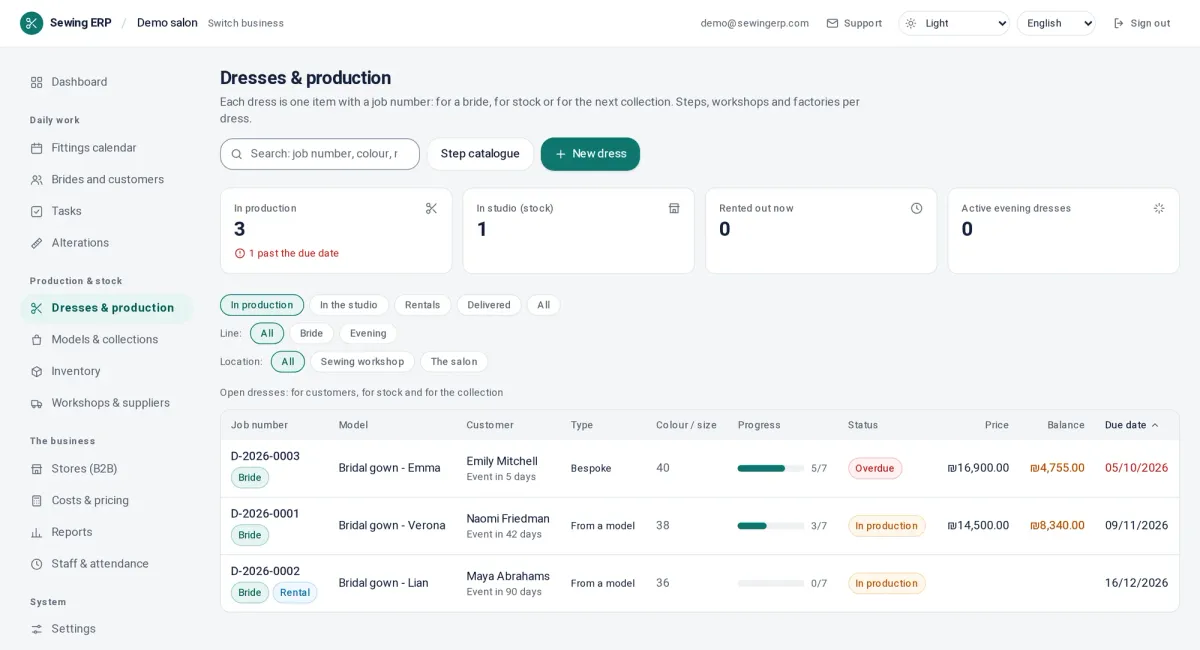
Record the hours where they happen. In SewingERP each dress has a job number and moves through your sewing stages, and seamstresses mark the start and end of each stage by scanning the dress card on their phone. The hours, each worker's rate at the time, purchases and outside work orders linked to the dress, and the overhead percentage from your settings add up to a live cost. When the dress is delivered, you close it and its profit is frozen.
What should I do with the number?
Compare the real margin of the last few dresses of each model with the margin you priced. Where it is lower, raise the price, change the model, or look at which stage ate the hours. That is the point: price the next dress on what the last one really cost. The same thinking works for pricing alterations.