Guide · Planning
Wedding dress fitting timeline: a bridal shop schedule
A gown that is ready on time is planned backwards from the wedding date, not forwards from the day the bride says yes. Start with the delivery date, put a buffer before it, place the fittings, and only then see how much time is left for sewing. If that time is not enough, you find out at the first appointment instead of three weeks before the wedding.
Why plan backwards from the wedding date?
Because the wedding date is the only date that cannot move. Everything else (when the lace arrives, how long the beading takes, when the bride is free for a fitting) can slip, and each slip eats into the time left. When the plan starts from the end, every delay is visible as lost buffer the day it happens. When it starts from the order date, delays pile up silently and land on the last two weeks.
Planning backwards also gives the shop an honest answer for the bride who books late. If the plan does not fit, you can change the design, add a rush fee, or decline before taking a deposit, instead of promising a date the workroom cannot meet.
What does a typical schedule look like?
Here is an example for a made-to-order gown, counted back from the wedding. The lengths are a starting point to replace with your own workroom's numbers:
- Delivery: about a week before the wedding. The dress is finished, pressed and handed over or ready for pickup. That week is the buffer for a late correction, a steam, or a bride who is ill on the day of the final fitting.
- Final fitting: two to three weeks before. The bride wears her shoes and underwear; the hem and bustle are set. Only small corrections should be left after it.
- Second fitting: four to six weeks before. The main changes from the first fitting are in, embroidery or beading is placed, the fit is checked again.
- First fitting: two to three months before. On the toile or the base of the dress. This is where big changes happen, so it needs the most room after it.
- Sewing and embroidery: between the measurements and the first fitting. The longest stretch, and the one that grows when lace is late or a piece goes to an outside workshop.
- Measurements, design and ordering materials: at the start. The fabric and lace must be in the workroom before sewing can start; order them the week the deposit is paid.
For a gown that is bought and altered rather than made, the same order applies with a shorter middle: the dress arrives, the first fitting happens soon after, then a final fitting two to three weeks before the wedding.
How much buffer should I keep?
At least one week between the planned finish and the wedding, and more in the busy season. Brides lose or gain weight close to the wedding, a supplier sends the wrong shade, a seamstress is off sick. Count the buffer as part of the plan, not as spare time: if a stage starts to run late, the buffer is what you are spending, and you should know how much of it is left.
Peak seasons need extra room. When many weddings fall in the same months, every fitting slot and every workroom hour is shared by more dresses, so the same gown takes longer to get through. Plan those dresses earlier, or accept fewer of them.
How do I spot a delay before it becomes a crisis?
Give every stage of every dress a due date and a person, and look once a day at what is late. The signs are always the same: a stage that has been in progress for days with no update, a stage that nobody is assigned to, materials that were due last week, work at an outside seamstress past its return date, and a bride whose wedding is close with no fitting booked.
None of these is a disaster on the day it appears. Each becomes one if nobody notices it for two weeks. The habit that saves dresses is a short daily look at the exceptions, not a long weekly review of every gown.
How do I keep the bride on schedule?
- Book all the fittings at the first appointment, not one at a time. A bride who knows her dates keeps them, and you see clashes early.
- Remind her the day before each fitting, by message or email, with the time and what to bring (shoes, underwear, accessories).
- Tell her what each fitting is for. If she knows the hem is set at the final fitting, she brings the right shoes.
- Write down the measurements at every fitting, so a change in her size is visible and planned for, not discovered at the last one.
How does SewingERP help?
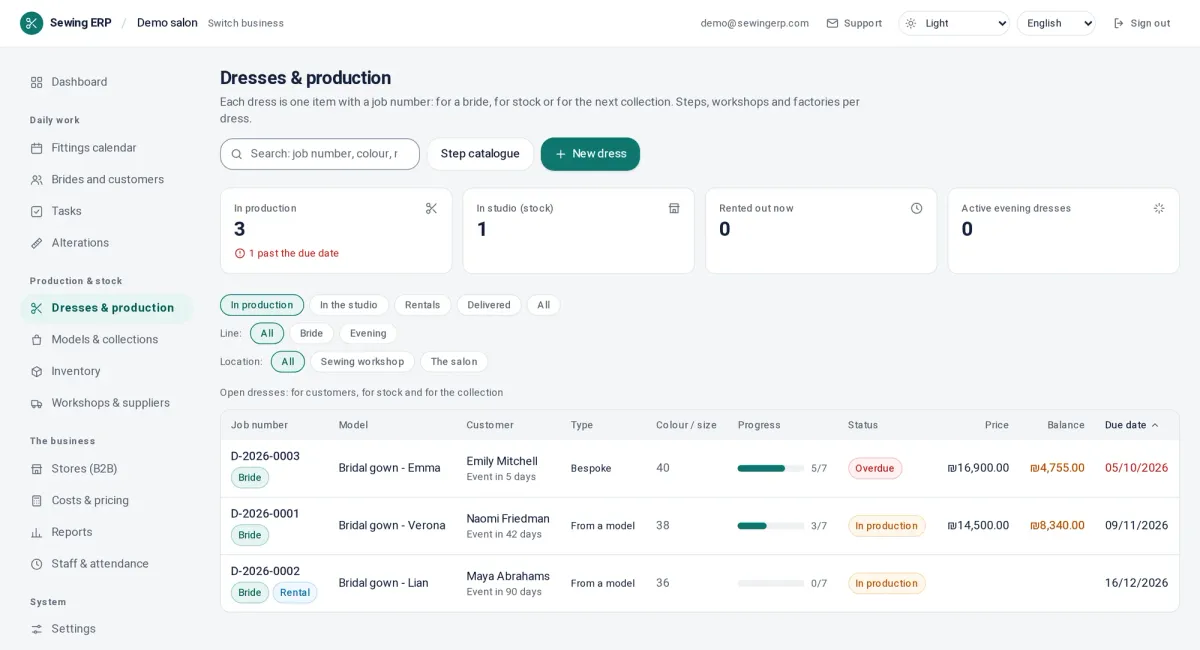
In SewingERP each dress has a job number, a due date and your own sewing stages. When a dress is opened for a bride, its due date is set by default to a week before her event, and you can change it. Each stage can have its own due date and person, and a late stage is flagged on the dress. The fitting calendar holds consultations, fittings, the final fitting and delivery, and optional email reminders go out the day before.
The dashboard's “What's stuck today” list shows dresses past their due date, stages open for three days or more, stages with nobody assigned, outside work past its return date, materials that were due, and brides whose wedding is less than a month away with no fitting booked. It does not plan the stages backwards for you: you set the dates, and it tells you when one slips.
Questions
How many fittings does a wedding dress need?
Plan three for most gowns: a first fitting on the base or toile, a second once the main changes are in, and a final fitting with the bride's shoes and underwear. A simple alteration can need only two; a fully bespoke gown or a big change in the bride's measurements can need a fourth. Put the extra fitting in the plan from the start instead of squeezing it in later.
When should the final fitting be?
Two to three weeks before the wedding, so there is still time for a last correction. The dress should then be finished and handed over about a week before the event, not the day before.
How far ahead should a bride order a made-to-order gown?
Count backwards from the wedding: a week of buffer, the fittings and the time between them, the sewing and embroidery, and the time to get the fabric and lace in. For a bespoke gown that usually lands somewhere between six and twelve months; for a gown that is only altered, two to three months are often enough. Use your own workroom's numbers, not a general rule.
What do I do when a bride books late?
Build the same schedule backwards and see what does not fit. If a step cannot be shortened, say so before you take the deposit and change the plan: a simpler design, fewer handmade parts, or a rush fee that pays for the extra hours.