Guide · Alterations
Bridal alterations tracking: jobs, fittings and deadlines
An alteration is a small project with a hard deadline. It has a bride, a dress, two or three fittings, a list of changes that grows at every one of them, a seamstress or two, a price, and a wedding date that does not move. Shops that track it in a notebook or a WhatsApp group lose the same things every season: a hem that was pinned but never sewn, a fitting nobody wrote down, a balance that was never collected. This guide is the record that stops that.
One job per dress, not one chat per bride
The unit of work is the dress, not the bride. A bride can have a gown and a reception dress, each with its own fittings, changes and seamstress, and each needs its own job. Give the job a number you can write on the garment bag and say on the phone (A-2026-0142), and put everything about that dress under it: measurements, the pinning photos, the list of changes, the stages, the price and the pickup date.
- Bride and date: name, phone, wedding date, and the date she needs the dress, which is earlier.
- The dress: model, size, color, where it came from (bought here, bought elsewhere, family heirloom) and its condition on arrival, with a photo.
- Changes per fitting: hem, sides, straps, bustle, cups, lining, beading, zip or buttons. Each line with who pinned it and at which fitting.
- Price and balance: the quoted price, deposit, and what is left at pickup. The quote is easier when you price alterations by the line.
Fittings on a calendar, with the deadline worked backwards
Book the fittings from the wedding date backwards, not from today forwards. The final fitting goes one to two weeks before the wedding, the second about four weeks before, the first six to eight weeks before, and each fitting needs sewing time after it. When a bride books late, the calendar shows immediately which fittings will not fit and the conversation happens before the dress is cut, not the week of the wedding. The fitting timeline guide has the full schedule.
In SewingERP the fittings are appointments on the bride's card, with rooms and staff, an optional online booking page, and an email reminder the day before. A fitting that is marked done can record the new measurements, so the card keeps a history instead of a single overwritten number.
Stages the seamstress reports, not a status someone guesses
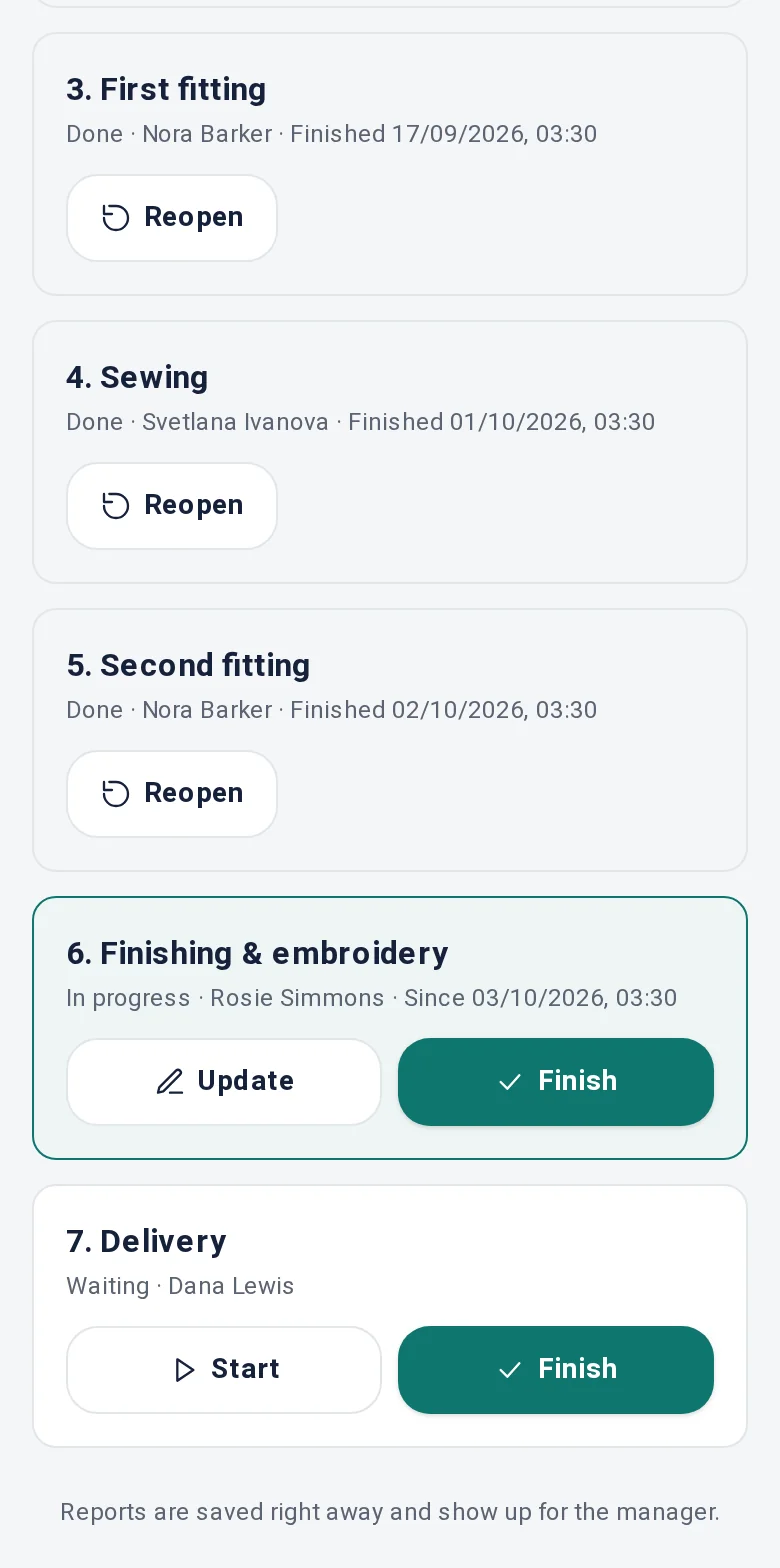
Between fittings the job is in the workroom, and the question the front desk gets is always the same: is it ready? The answer should come from the person sewing, at the moment she finishes, not from a phone call. Split the job into the stages your workroom really uses (take in sides, hem, bustle, press, final check) and let the seamstress mark each one started and finished.
In SewingERP the dress card carries a QR code. The seamstress scans it with her phone, picks her name and taps start or finish on her stage. Nothing to install, no password. The shop sees the whole workroom on one screen, and the hours of each stage, at each worker's rate, become the real cost of the alteration.
A list of what is late, every morning
Tracking only pays off if someone looks at it, so the system should do the looking. The useful list is short: alterations past their due date, stages open for days with no update, stages nobody is assigned to, fittings in the next two weeks for brides with a balance, and work sent to an outside workroom that is past its return date. That list is the morning meeting.
SewingERP's dashboard has exactly that list, called “what's stuck today”. It is built from the jobs, the stages and the calendar, so nothing has to be typed twice.
Photos, measurements and the pickup
- Photos at every fitting. A photo of the pinned hem settles the “it was longer last time” conversation. Attach it to the job, not to a phone's camera roll.
- Measurements with a date. Brides change size between fittings; a measurement history shows it. Garment measurements belong to the dress, body measurements to the bride.
- Pickup with a signature. A short agreement signed at the first fitting (what is included, when it is due, the cancellation terms) and a signature at pickup prevent most disputes. E-signatures are included in every plan. What to record and have signed goes through it step by step.
- The balance before the dress leaves. Put the balance on the pickup appointment, and remind the bride a few days before. Deposits and payment plans explains a policy that works.
Questions
What should an alterations record contain?
The bride and her wedding date, the dress (model, size, color), what was pinned at each fitting, the sewing stages with who does them and by when, the price agreed and the balance, photos of the pinning, and the pickup date. Everything else is a note on that record, not a message in a chat.
How many fittings does a wedding dress need?
Usually two or three: a first fitting six to eight weeks before the wedding to pin the main changes, a second to check them and pin the hem and bustle, and a final fitting one or two weeks out. Dresses with heavy beading, lace appliqué or a corset back often need one more.
How does SewingERP track alterations?
Every alteration is a job on the bride's card, linked to her dress. The fittings sit in the calendar with reminders, the job moves through your own sewing stages, and the seamstress marks each stage from her phone by scanning the dress card. The dashboard lists what is past its date or stuck, and the balance is on the same card as the payments.
Can outside seamstresses be part of the same tracking?
Yes. A stage can be assigned to an outside seamstress or workroom; SewingERP creates a work order with what was sent, the return date and the price, and the supplier sees only her jobs in her own portal, never the bride's details. Outside work is in the Atelier and Pro plans.